
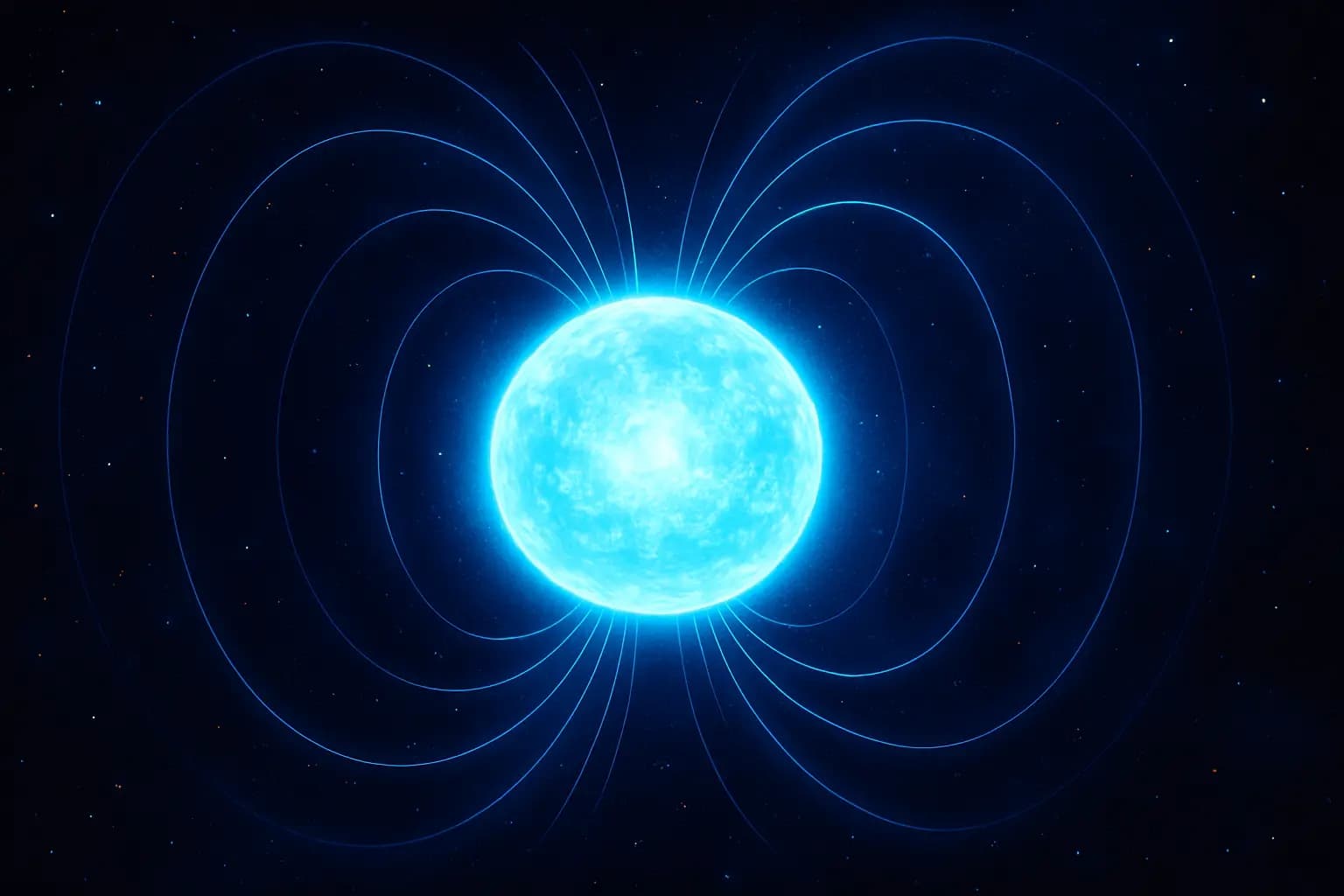
The Strange Fate of Dying Stars: Neutron Stars and What They Leave Behind
When a massive star exhausts its nuclear fuel, it does not simply fade away. It collapses inward with catastrophic violence, and if conditions are precisely right, what remains is one of the most extreme objects in the known universe: a neutron star. Roughly the size of a city yet harbouring the mass of one and a half suns, these stellar corpses compress matter to densities so extraordinary that a single teaspoon of their interior would weigh approximately a billion tonnes on Earth. To contemplate them is to brush up against the outer limits of physics itself.
The formation of a neutron star begins with a supernova — a stellar explosion of such ferocious magnitude that, for days, it can outshine an entire galaxy. When the outer layers of the dying star are blasted away, the iron core that remains undergoes gravitational collapse in a fraction of a second. Electrons and protons are crushed together into neutrons, and the result is a sphere perhaps twenty kilometres across, rotating at speeds that would be frankly inconceivable by everyday standards. Newly formed neutron stars can spin hundreds of times per second, their surfaces moving at a substantial fraction of the speed of light.
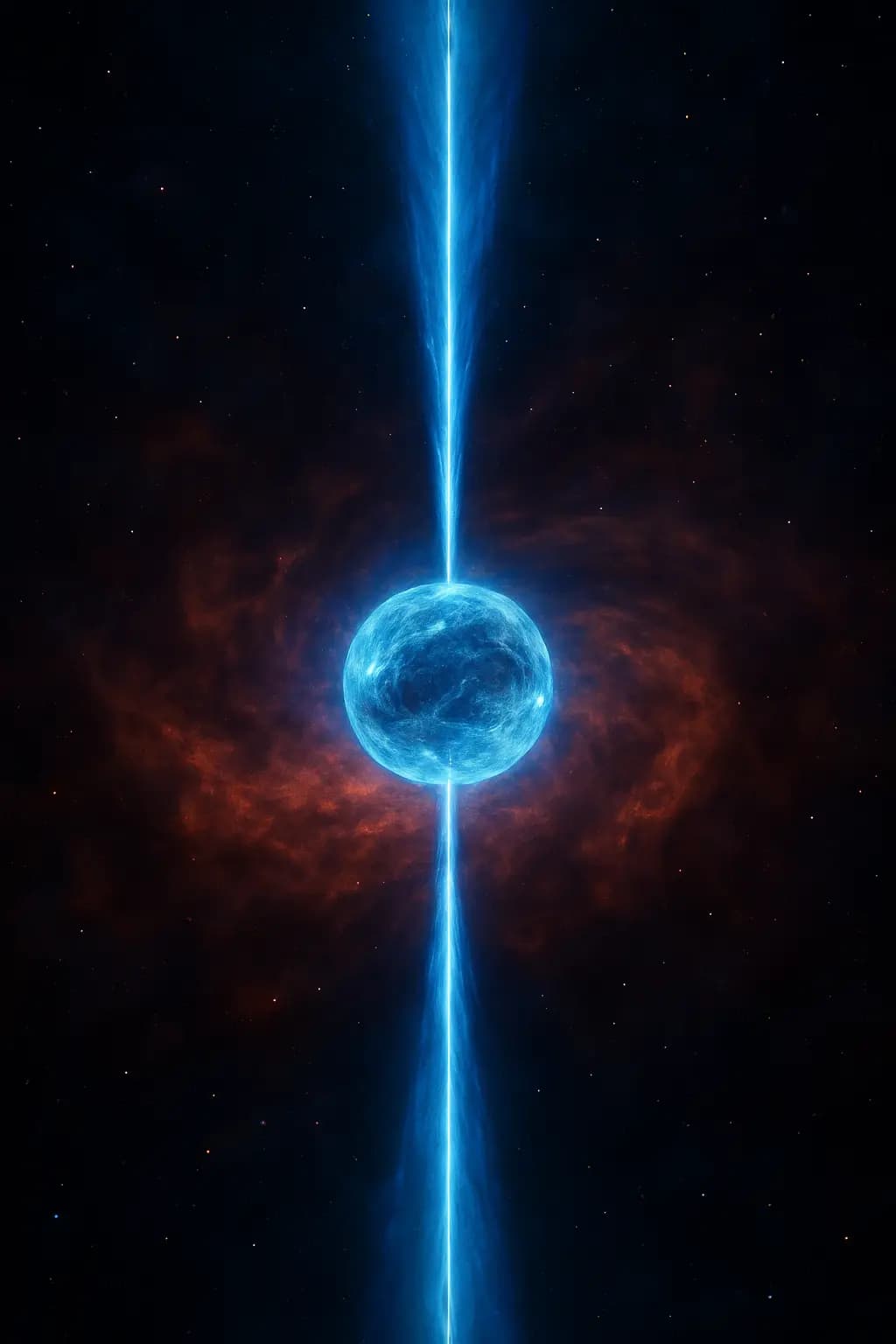
Among the most compelling variants of neutron stars are pulsars — those that emit narrow beams of electromagnetic radiation from their magnetic poles. Because a pulsar rotates, these beams sweep the cosmos like a cosmic lighthouse, and when one happens to point toward Earth, our instruments detect a regular pulse of radio waves or X-rays arriving with extraordinary precision. Some pulsars rival atomic clocks in their regularity, drifting by less than a microsecond per year. Astronomers have exploited this reliability to test general relativity, study interstellar matter, and even search, speculatively, for gravitational wave signatures embedded in the timing variations.
Perhaps the most dramatic class of all is the magnetar — a neutron star endowed with a magnetic field trillions of times stronger than Earth's own. Magnetars occasionally unleash starquakes, convulsions in their rigid crystalline crust that release more energy in a fraction of a second than our sun emits across tens of thousands of years. On 27 December 2004, a magnetar located fifty thousand light years away discharged a burst powerful enough to measurably ionise Earth's upper atmosphere. Had the source been even modestly closer, the consequences for life on Earth would have been severe — a sobering reminder that the cosmos is not, on balance, a gentle place.

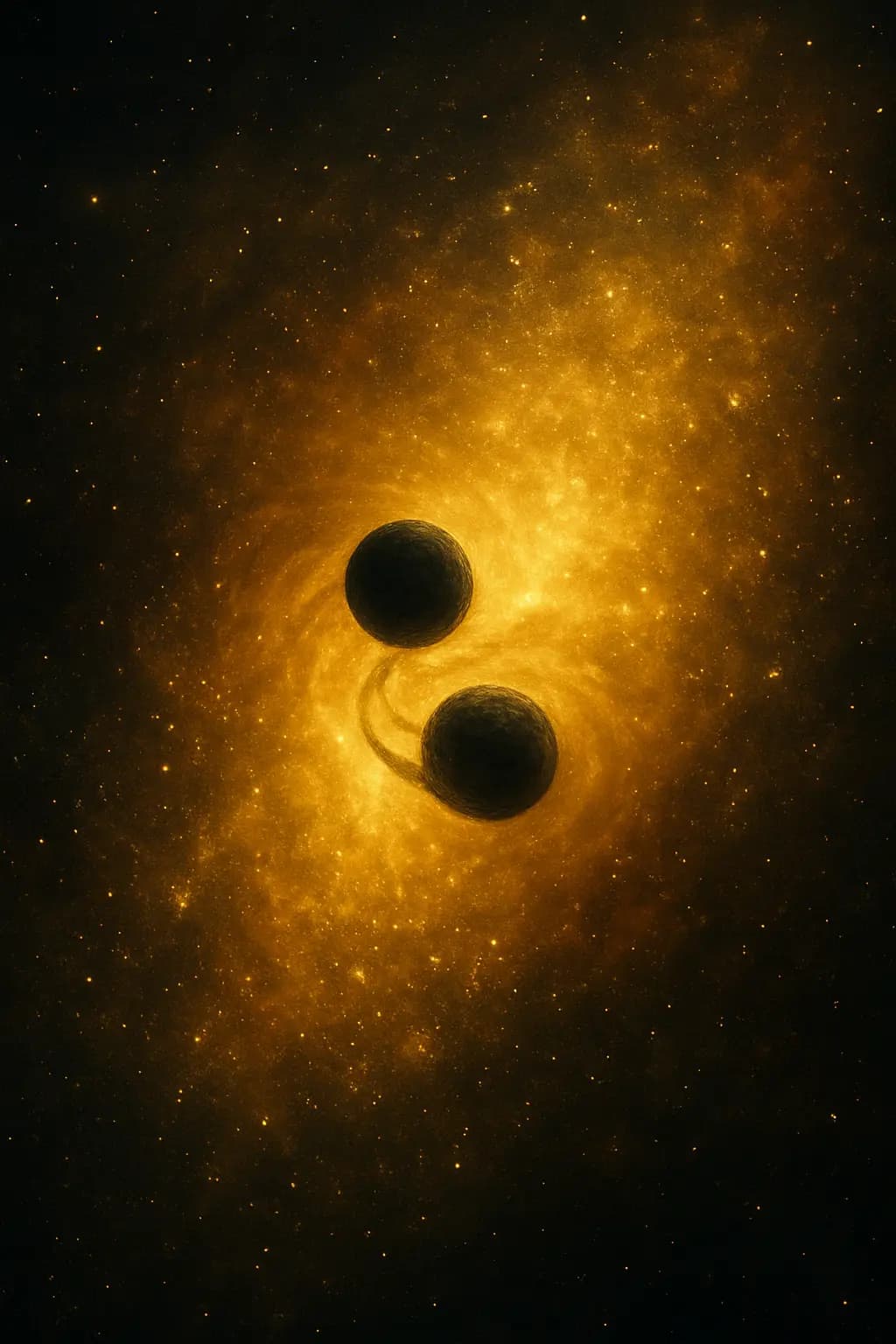
When two neutron stars orbit each other and eventually spiral inward — bleeding orbital energy into gravitational waves — the merger that follows is violent beyond ordinary description. Such events, dubbed kilonovae, forge heavy elements including gold, platinum, and lanthanides in conditions of extreme neutron flux, scattering them across space. The gold in a wedding ring, in all likelihood, was forged in just such a cataclysm billions of years ago. Every kilonova detected by instruments like LIGO and Virgo refines our understanding of where the periodic table's heaviest entries actually come from — a question that, not long ago, had no satisfying answer.
Neutron stars reward study not merely because they are spectacular, but because they serve as natural laboratories for physics that cannot be replicated on Earth. The behaviour of matter at nuclear densities, the interplay of extreme gravity and magnetism, the emission mechanisms that power pulsars — none of these can be probed in a terrestrial experiment. In this sense, each neutron star is both a graveyard and a gift: the ruined remnant of a vanished sun, still teaching us, across vast distances and deep time, what the universe is fundamentally made of.