
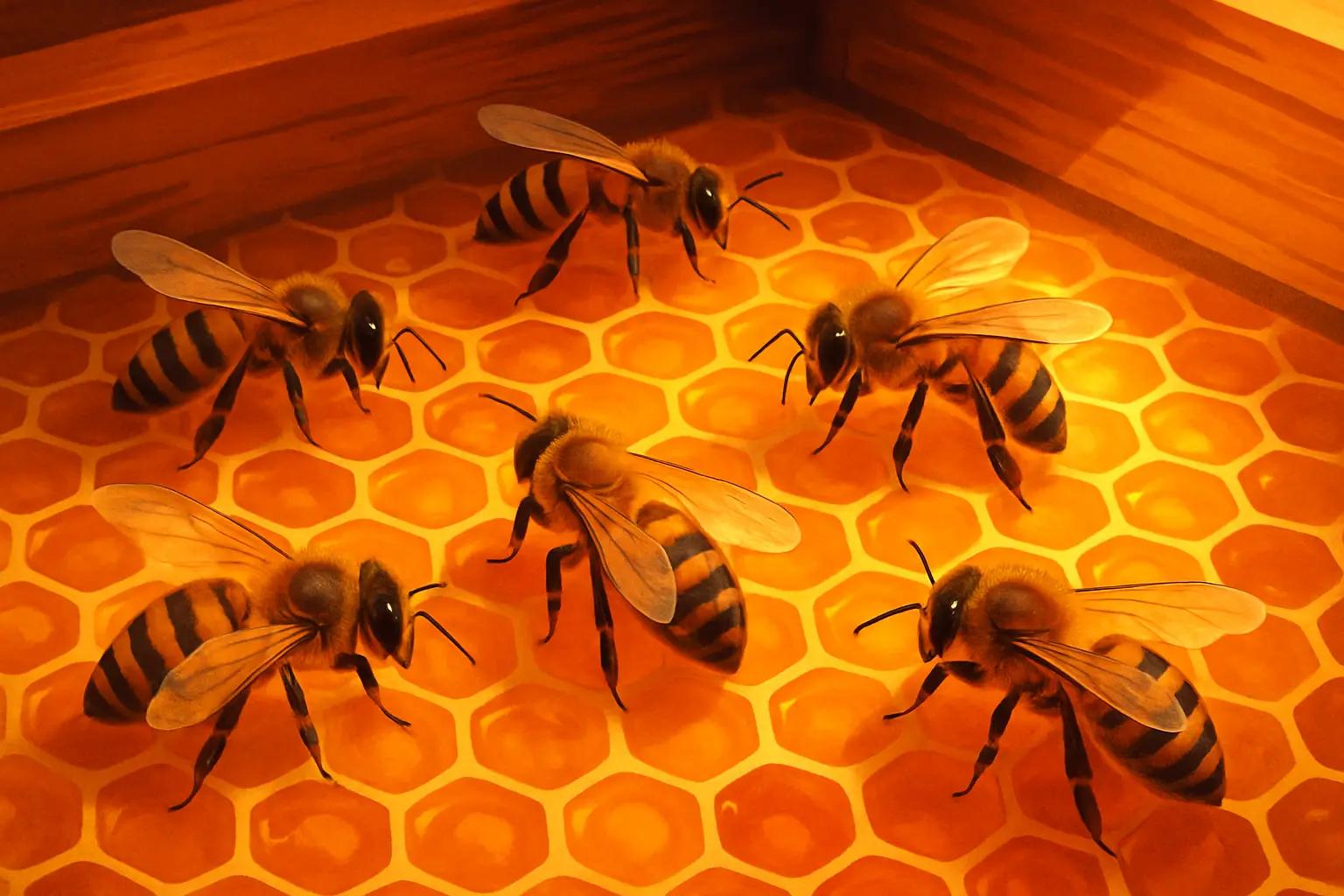
The Hidden Language of Bees: How Insects Communicate with Dance
When we think of language, we tend to imagine words, grammar, and the rich complexity of human speech. Yet one of the most elegant communication systems in the natural world belongs not to primates or dolphins, but to the honeybee — an insect with a brain no larger than a sesame seed.
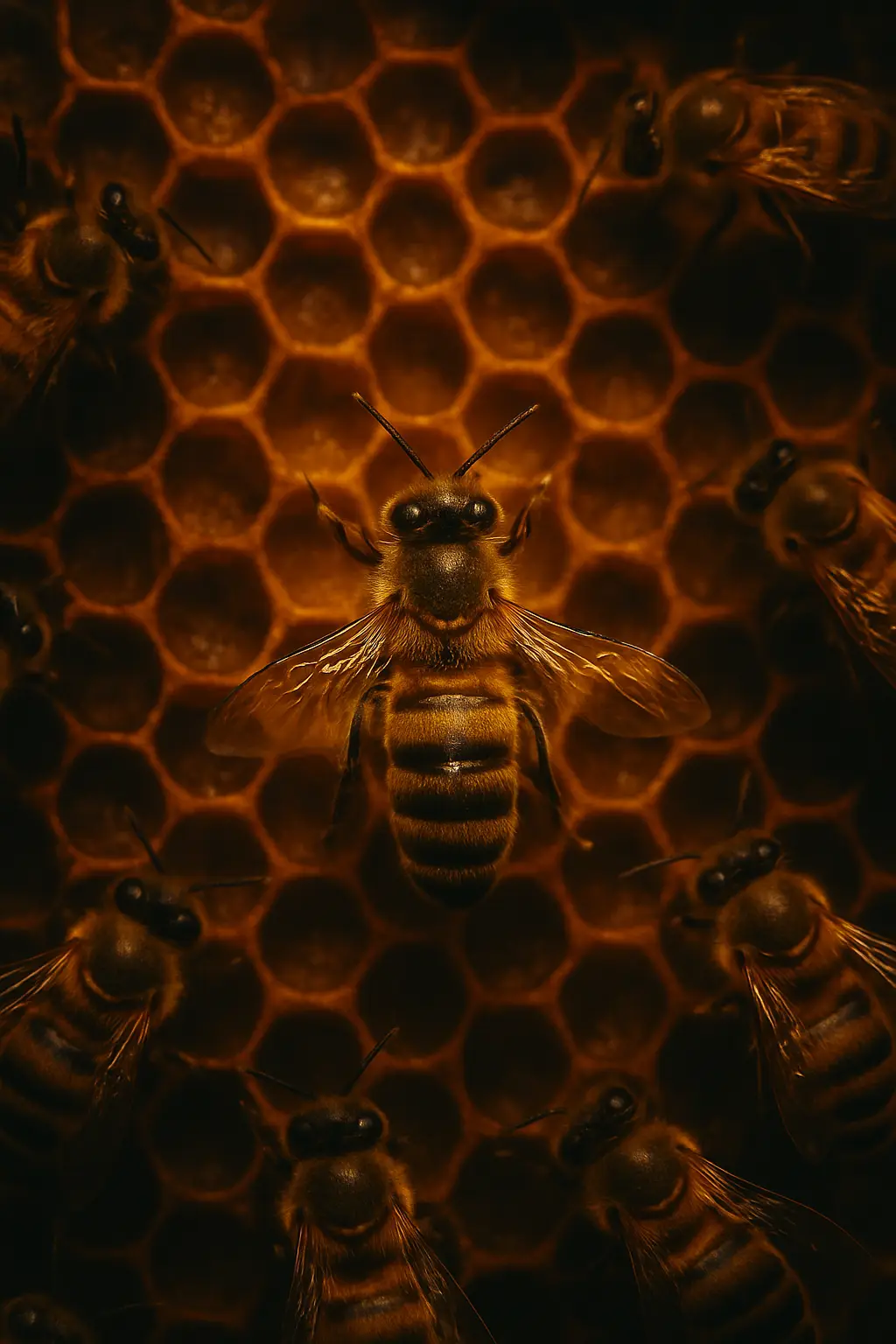
In the 1940s, Austrian zoologist Karl von Frisch made a remarkable discovery: honeybees communicate the precise location of food sources through a series of choreographed movements now known as the "waggle dance." When a forager bee returns to the hive after locating nectar, it performs a figure-of-eight pattern on the vertical surface of the honeycomb. The angle of the central "waggle run" corresponds to the direction of the food relative to the sun, while the duration of each waggle indicates the distance. Other bees crowd around the dancer, reading these signals through touch and vibration in the near-total darkness of the hive. It is, by any measure, a sophisticated form of symbolic communication.
What makes this finding so compelling is not merely the ingenuity of the dance itself, but what it implies about the evolution of communication. Von Frisch's work, which earned him a Nobel Prize in 1973, suggested that the capacity to encode and transmit abstract spatial information is not an exclusively human trait. Researchers have since discovered regional "dialects" among bee populations — subtle variations in dance tempo and movement that differ between colonies separated by geography, much as accents emerge in human languages over generations.
More recently, scientists have used harmonic radar technology and machine learning to decode previously misunderstood aspects of the waggle dance, revealing a level of precision that had been underestimated. Some researchers now argue that bees can adjust their communication in response to environmental disruption — changing dance patterns when familiar landmarks disappear due to habitat loss or urban development.
The honeybee's dance is a reminder that intelligence and communication are not the sole preserve of large-brained creatures. Nature, it seems, has found ingenious solutions to complex problems at every scale.