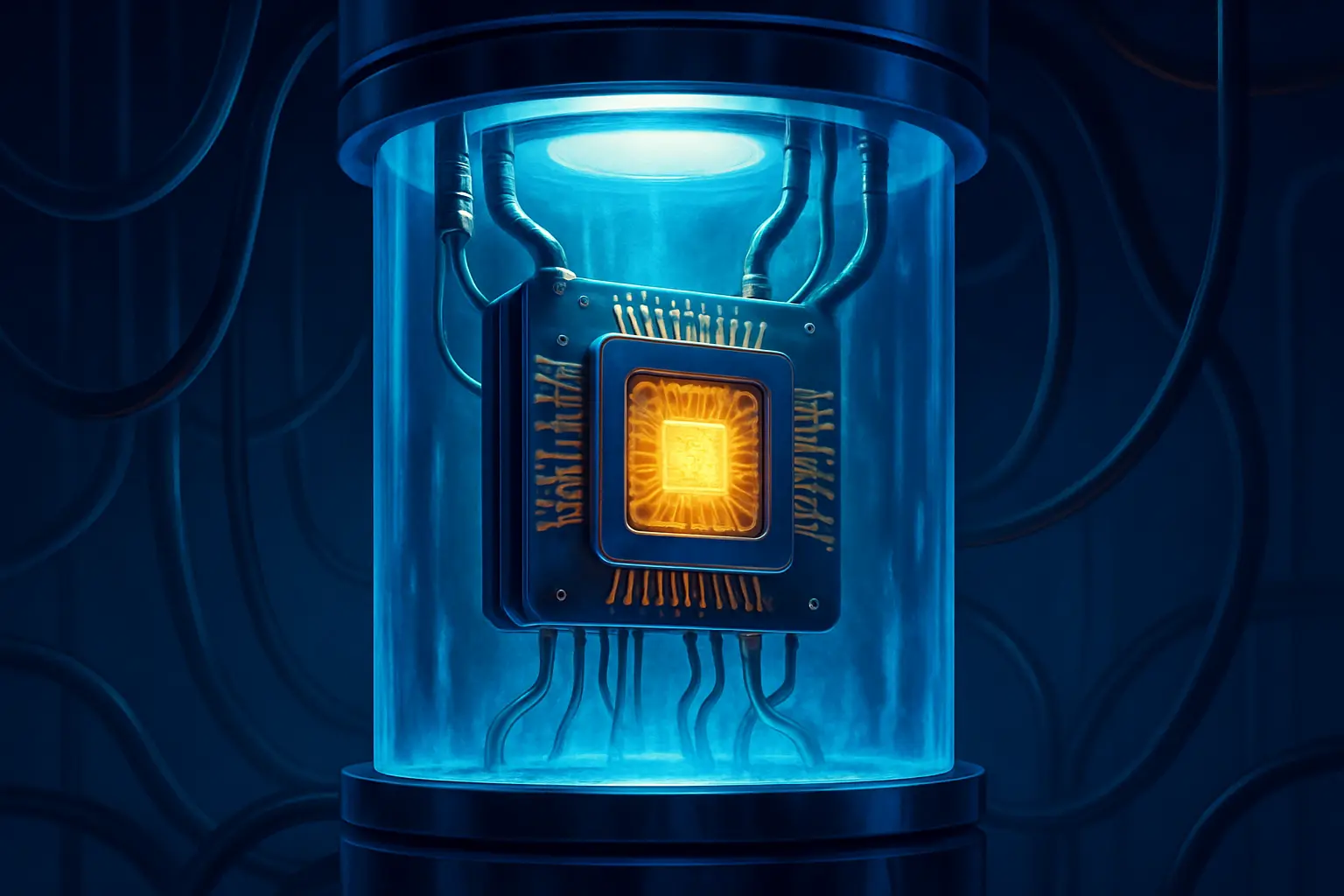
The Strange World Inside a Quantum Computer
For most of computing's history, the fundamental unit of information has been the bit — a switch that is either off or on, zero or one. This binary simplicity underlies everything from spreadsheets to streaming services. Yet for a growing class of computational problems, classical computers are, in a meaningful sense, inadequate. Quantum computing proposes a radical departure from this architecture, one rooted not in electronics but in the deeply counterintuitive behaviour of matter at its smallest scales.
At the heart of a quantum computer sits the qubit, the quantum analogue of the classical bit. Unlike its predecessor, a qubit can exist in a superposition of states — simultaneously zero, one, or any combination thereof — until the moment it is measured. This is not a metaphor or a convenient shorthand; it reflects a genuine physical reality described by quantum mechanics. A system of fifty qubits in superposition can, in principle, represent two to the power of fifty states simultaneously, a number that dwarfs the memory capacity of any classical machine. It is this exponential scaling that makes quantum computing so tantalising.
Equally important is the phenomenon of entanglement. When two qubits become entangled, the state of one is instantaneously correlated with the state of the other, regardless of the physical distance between them. This property allows quantum computers to manipulate information in ways that have no classical equivalent, enabling certain algorithms to solve problems with a speed advantage that grows exponentially with problem size. Quantum algorithms designed for tasks such as factoring large integers or simulating molecular interactions could, in the right circumstances, outperform the best classical supercomputers by an astronomically wide margin.