The Quiet Ritual of Evening Tidying
There is a particular kind of satisfaction — one that resists easy articulation — in bringing a disordered space back to order as the day closes. It is not the dramatic overhaul that television programmes celebrate, nor the near-spiritual decluttering philosophy that filled bookshelves a decade ago. It is something far more modest and far more durable: the small, repeated act of tidying up before you go to bed.

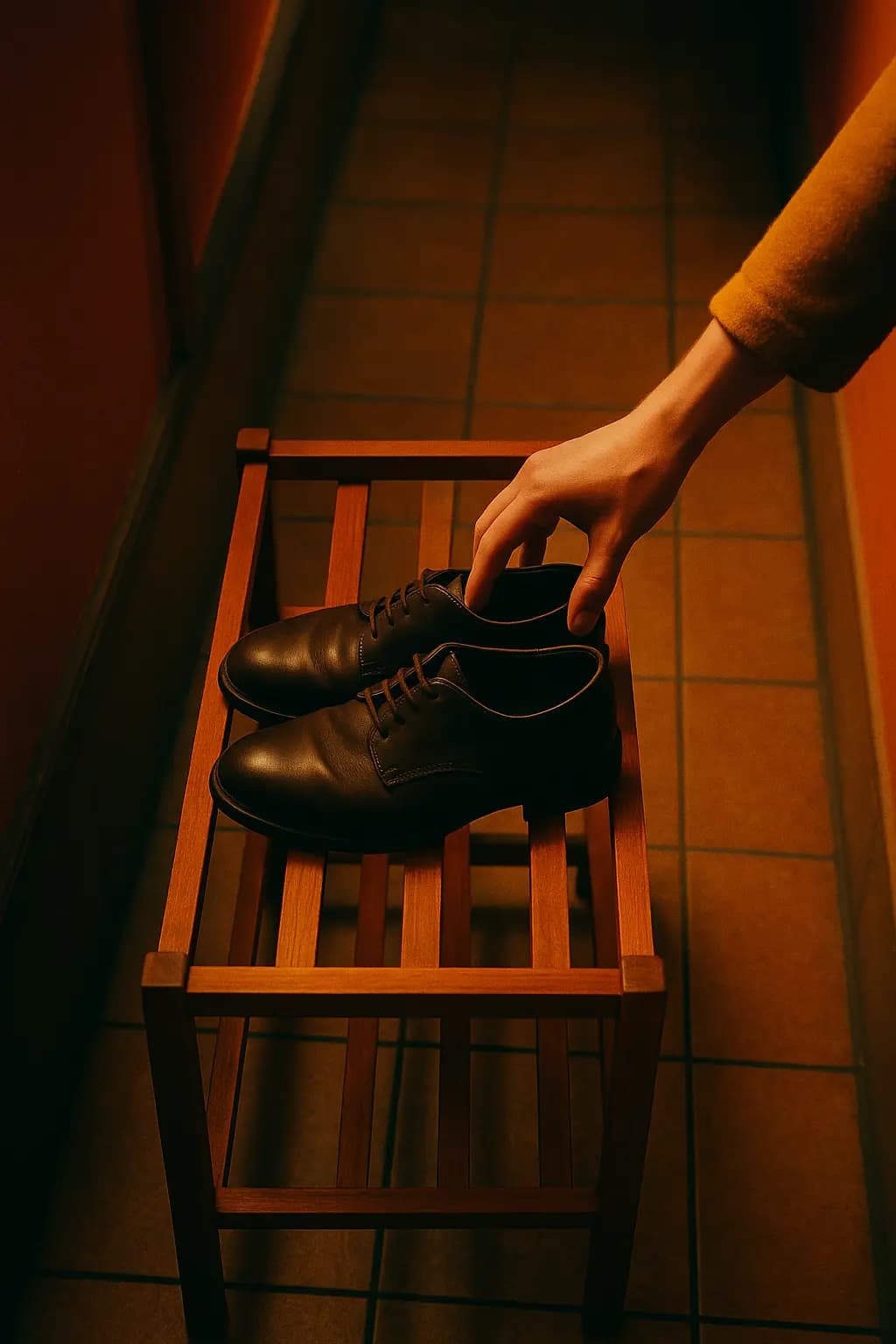
For many people, this evening ritual barely registers as a conscious choice. Cups migrate back to the kitchen, shoes find their way to the rack, the sofa cushions are pressed back into approximate symmetry. The sequence is so ingrained that it happens almost on autopilot — a kind of domestic muscle memory that kicks in somewhere between the last television programme and the brushing of teeth. Yet dismiss it too quickly and you miss what it is quietly doing for you.
Psychologists who study environmental psychology have long argued that clutter exerts a low-grade cognitive tax on the mind. Visual disorder competes for attention, fragments concentration, and generates a persistent, low-level anxiety that most people cannot precisely name but nonetheless feel. Tidying, then, is not merely an aesthetic preference or a personality quirk — it is a form of self-regulation. By closing the day with a cleared surface and a straightened room, you are, in a very literal sense, closing the mental tab that the mess has held open.

What makes the evening timing particularly potent is its relationship to sleep. Researchers in sleep hygiene increasingly point to the pre-sleep environment as a determinant of sleep quality that rivals screen exposure and room temperature. A cluttered bedroom, one study found, correlated with greater difficulty falling asleep and more frequent nocturnal waking. The inference is not hard to draw: the brain that enters a disordered space carries its unfinished business into the attempt at rest, treating the surrounding chaos as an unresolved signal. Tidy the room, and you are, in some small but measurable way, giving the mind permission to stand down.

Beyond the neurological, there is a subtler argument about identity and agency. Evening tidying imposes a brief, deliberate pause between the day that has happened and the night that is coming — a transitional rite that cultures across the world recognise in different guises. The Japanese concept of "katazuke," the resetting of spaces at day's end, carries within it an understanding that the environment you inhabit is not merely a backdrop to your life but an active participant in it. To maintain a space is to maintain a self. There is nothing overwrought in that claim; it is simply the recognition that the outer and the inner are not as separate as modern individualism tends to insist.

None of this is to suggest that a life lived amid cheerful chaos is impoverished, or that the person who goes to bed with dishes in the sink has somehow failed the day. Human lives are messier than any rubric accommodates. But for those who find themselves carrying a diffuse fatigue that sleep alone does not resolve, who feel perpetually behind without quite understanding why, the evening tidy — ten minutes, no more — is worth trying not as a discipline but as an experiment. The hypothesis is a modest one: that a quiet, ordered room might just be one of the cheaper and more reliable invitations to genuine rest that ordinary life still affords us.