The Interstellar Medium: The Invisible Ocean Between the Stars
It is tempting to picture the space between stars as pure, featureless void — an absolute nothingness punctuated only by the occasional photon racing through the dark. The reality, as astrophysicists have come to understand it, is far stranger and considerably more consequential. The interstellar medium, or ISM, is the sprawling, diffuse material that permeates the galaxy between stellar systems: a vast, turbulent ocean of gas and dust that is simultaneously the graveyard of old stars and the cradle of new ones. Invisible to the naked eye in most of its forms, it shapes the architecture of the cosmos in ways that no telescope could have revealed to earlier generations of astronomers.
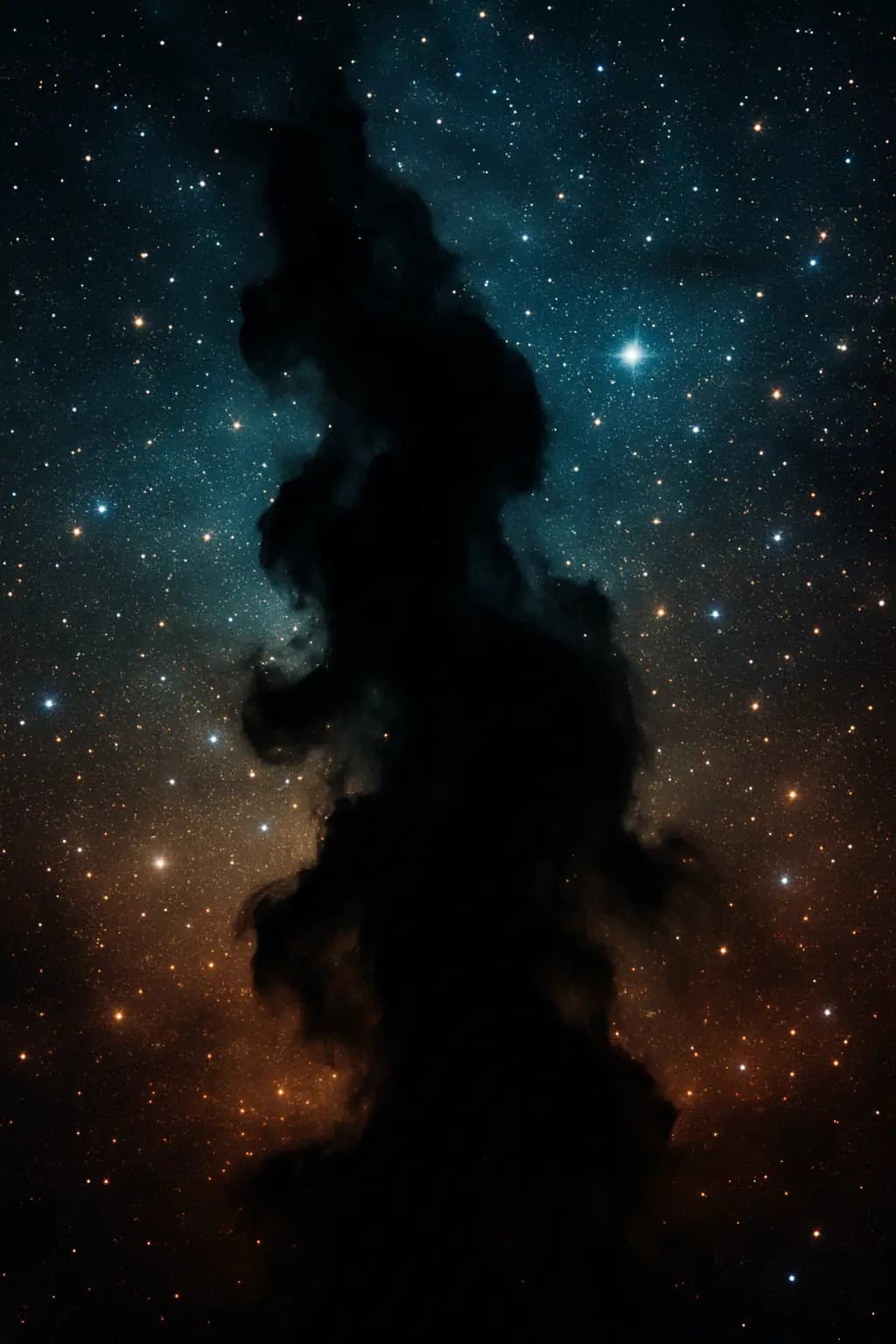
The ISM is not uniform. It exists in several distinct phases that co-exist in rough pressure equilibrium, each with wildly different temperatures and densities. At one extreme lie the cold, dense molecular clouds — dark, self-gravitating structures where temperatures plunge to around ten kelvin and hydrogen locks itself into molecules rather than remaining atomic. These clouds are the primary sites of star formation; within them, gravity competes with internal turbulence, magnetic fields, and radiation pressure until pockets of gas collapse and ignite into protostars. At the other extreme, the hot ionised medium — plasma superheated by supernova shockwaves to temperatures in excess of a million kelvin — fills the rarefied spaces between denser structures. Between these poles lie warm neutral gas, warm ionised regions, and cold neutral sheets, all jostling dynamically, exchanging matter and energy across their boundaries.
Dust, though it constitutes only about one percent of the ISM by mass, punches dramatically above its weight. These submicrometre-sized particles — composite grains of silicates and carbonaceous materials often coated in ices — absorb and scatter ultraviolet and optical light, rendering entire regions of the galaxy opaque to conventional observation. This phenomenon, known as interstellar extinction, bedevilled early twentieth-century astronomers who consistently underestimated the true distances to objects obscured by dust lanes. Dust also catalyses chemistry: molecular hydrogen, the universe's most abundant molecule, forms predominantly on the surfaces of dust grains rather than in the gas phase, making these tiny particles indispensable intermediaries in the chain of reactions that produce the molecular complexity necessary for life.
The ISM is not a passive stage but an active participant in galactic evolution. Stellar winds and supernova explosions inject enormous quantities of mechanical energy and chemically enriched material into the surrounding gas, seeding it with heavy elements forged in stellar interiors. This feedback loop — stars forming from ISM gas, living, dying, and returning processed material to the ISM — is the fundamental cycle underpinning the chemical evolution of galaxies. The oxygen in the water we drink, the iron in our blood, the calcium in our bones: all were once part of the interstellar medium, expelled from stars that lived and died before the Sun existed.
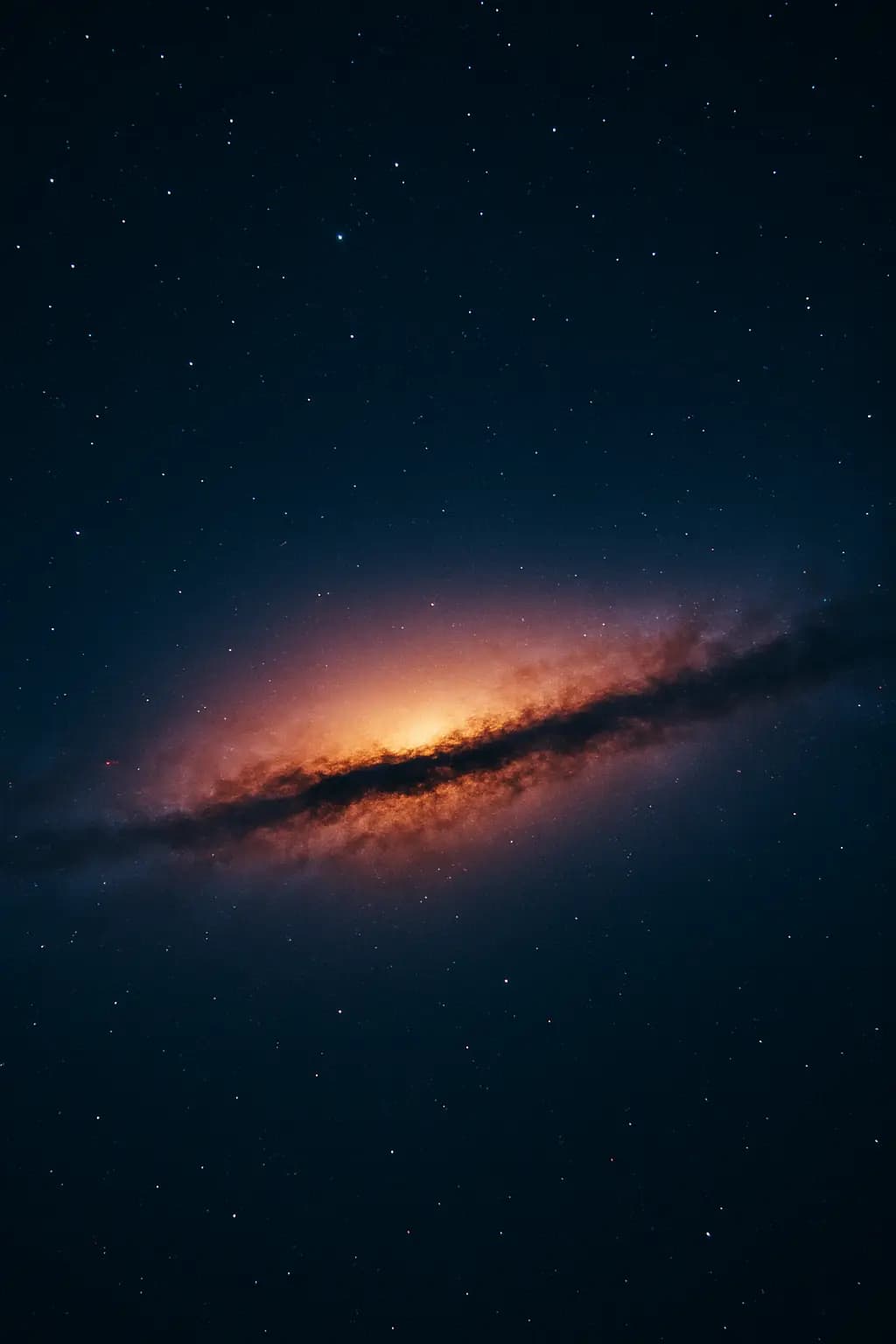
Modern radio and infrared observatories, from Hubble to ALMA to the James Webb Space Telescope, have transformed our picture of the ISM from a hazy inference to a detailed map of staggering complexity. Spectral line surveys reveal the signatures of over two hundred distinct molecular species lurking within molecular clouds, including amino acid precursors. Magnetic field tracers expose the intricate filamentary structure that channels collapsing gas into the narrow threads from which stellar clusters eventually emerge. What once seemed an empty backdrop turns out to be the most dynamic laboratory in the universe — one in which the raw ingredients of planets, atmospheres, and ultimately biology are endlessly recycled and refined, waiting for the right conditions to coalesce once more into something capable of looking back at the stars and wondering.