The Night That Changed the Calendar
Few artefacts of daily life feel as unremarkable as the calendar hanging on a kitchen wall, yet the story of how humanity settled on a shared system for measuring time is among the most turbulent in intellectual history. Calendars have toppled dynasties, ignited theological quarrels, and forced astronomers into uneasy alliances with politicians — all because the Earth refuses to orbit the sun in a conveniently round number of days.
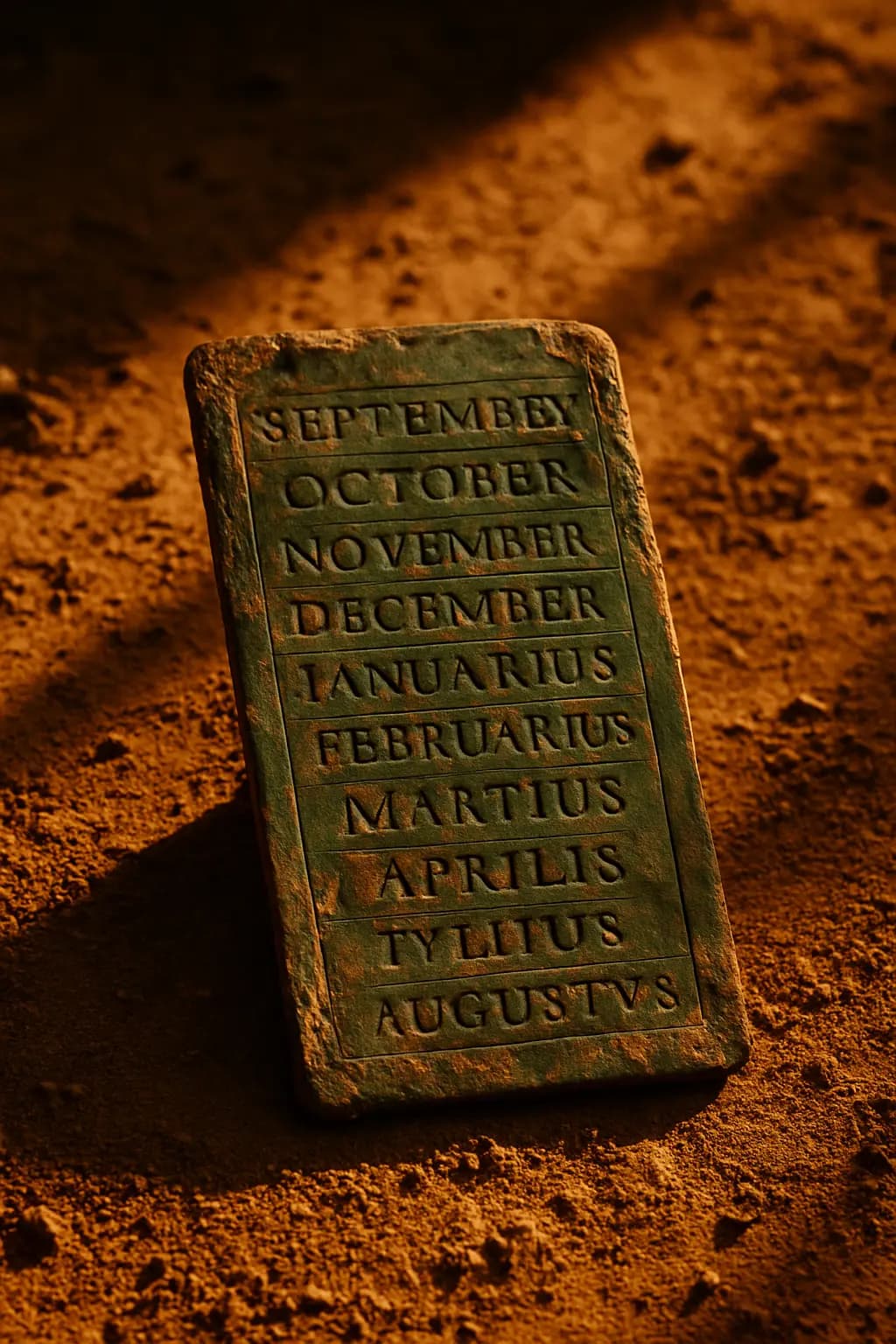
The Romans inherited a lunar calendar of ten months attributed, perhaps mythologically, to Romulus himself. It was an unwieldy thing, leaving a ghostly unaccounted gap of roughly sixty days in winter, a period so administratively inconvenient that the Romans simply declined to name it. Julius Caesar, returning from Egypt in 46 BCE and dazzled by the work of Alexandrian astronomers, resolved to impose order on this chaos. He consulted the mathematician Sosigenes of Alexandria, who advised adopting a solar year of 365 days with an intercalated day every four years. The resulting Julian calendar was a triumph of political will over astronomical uncertainty — bold, elegant, and just slightly wrong.

The flaw lay in an overestimate of roughly eleven minutes per year. Eleven minutes sounds trifling, but compounded across centuries, the Julian calendar drifted a full day out of alignment every 128 years. By the sixteenth century, the accumulated error had stretched to ten days, and the vernal equinox — on which the entire calculation of Easter depended — was falling conspicuously earlier than the Church could tolerate. The stakes were not merely liturgical: a miscalculated Easter implied a miscalculated Creation, and by extension a Church that had been misguiding the faithful for over a millennium.
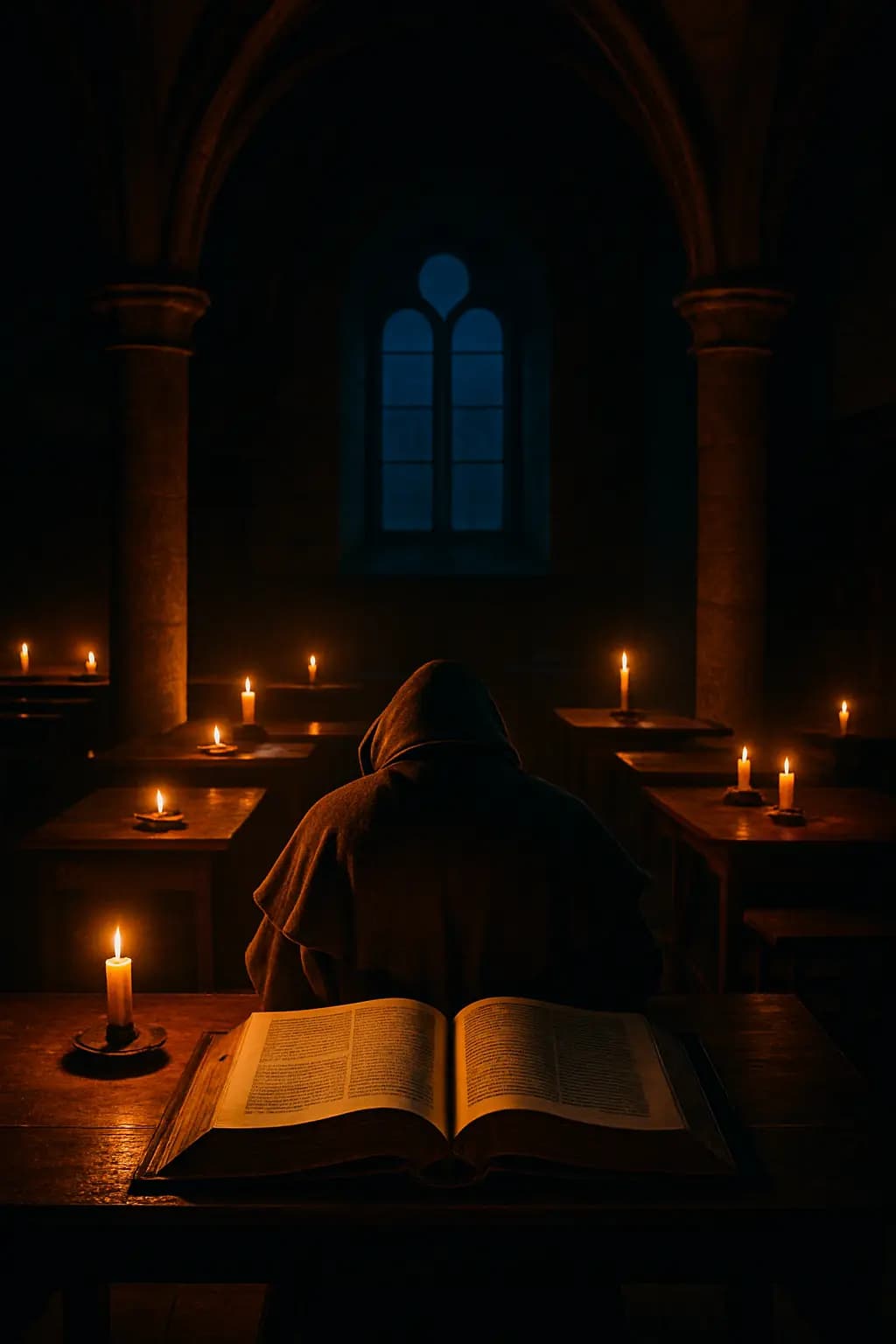
Pope Gregory XIII commissioned a panel of mathematicians and astronomers, most prominently the Calabrian physician Aloysius Lilius, to design a corrective system. Their solution was elegant in its specificity: century years would only be leap years if divisible by 400, shaving three leap days from every four centuries and reducing the annual error to a negligible twenty-six seconds. To realign the calendar with astronomical reality, Gregory decreed in October 1582 that ten days would simply be deleted. Citizens of Catholic Europe went to sleep on the fourth and woke on the fifteenth. Time, by papal fiat, had skipped.
Protestant and Orthodox nations resisted the Gregorian reform with a fervour that was as much political as theological. England stubbornly clung to the Julian calendar until 1752, by which point the gap had widened to eleven days. The transition provoked the famous — if largely apocryphal — riots of people demanding their 'eleven days' back, a story that speaks more to enduring popular anxiety about institutional power over private time than to documented unrest. Russia did not adopt the Gregorian calendar until 1918, meaning that the October Revolution, by the reckoning of the rest of the world, actually occurred in November.
What the calendar's history illuminates is a persistent human tension between the desire for tidy, universal systems and the irreducible messiness of the physical world. The Earth's orbital period will never yield a whole number; the moon's cycle will never synchronise cleanly with the solar year. Every calendar ever devised has been an act of negotiated fiction — a collective agreement to ignore certain inconvenient fractions in the name of social cohesion. The Gregorian calendar we use today is accurate to within one day in every 3,236 years, which is, by any reasonable standard, close enough. But 'close enough' has always been a political judgement as much as a scientific one, and that, perhaps, is the most honest thing that can be said about the way we measure time.