Dark Matter: The Universe's Greatest Unsolved Mystery
There is something deeply unsettling about the possibility that everything we can see, touch, and measure — every galaxy, every star, every atom of ordinary matter — accounts for less than five per cent of what actually exists in the universe. The rest, physicists tell us, is made up of two profoundly mysterious constituents: dark energy and dark matter. Of these, dark matter is arguably the more tractable puzzle, the one that leaves fingerprints even if it refuses to be seen. It neither emits nor absorbs light. It passes through ordinary matter as though the latter were not there. And yet its gravitational influence is so pervasive, so architecturally decisive, that without it the cosmos as we know it could not exist.
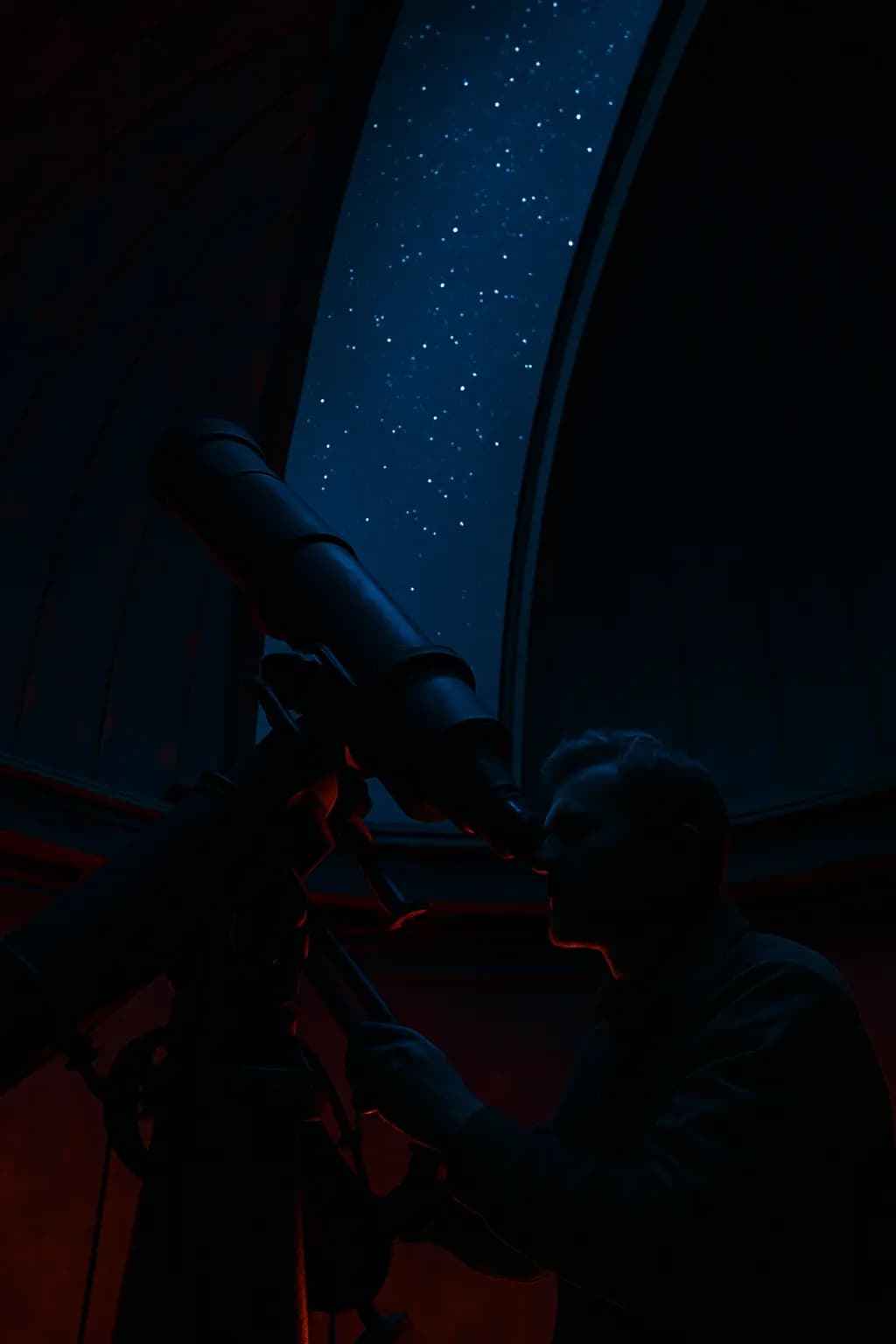
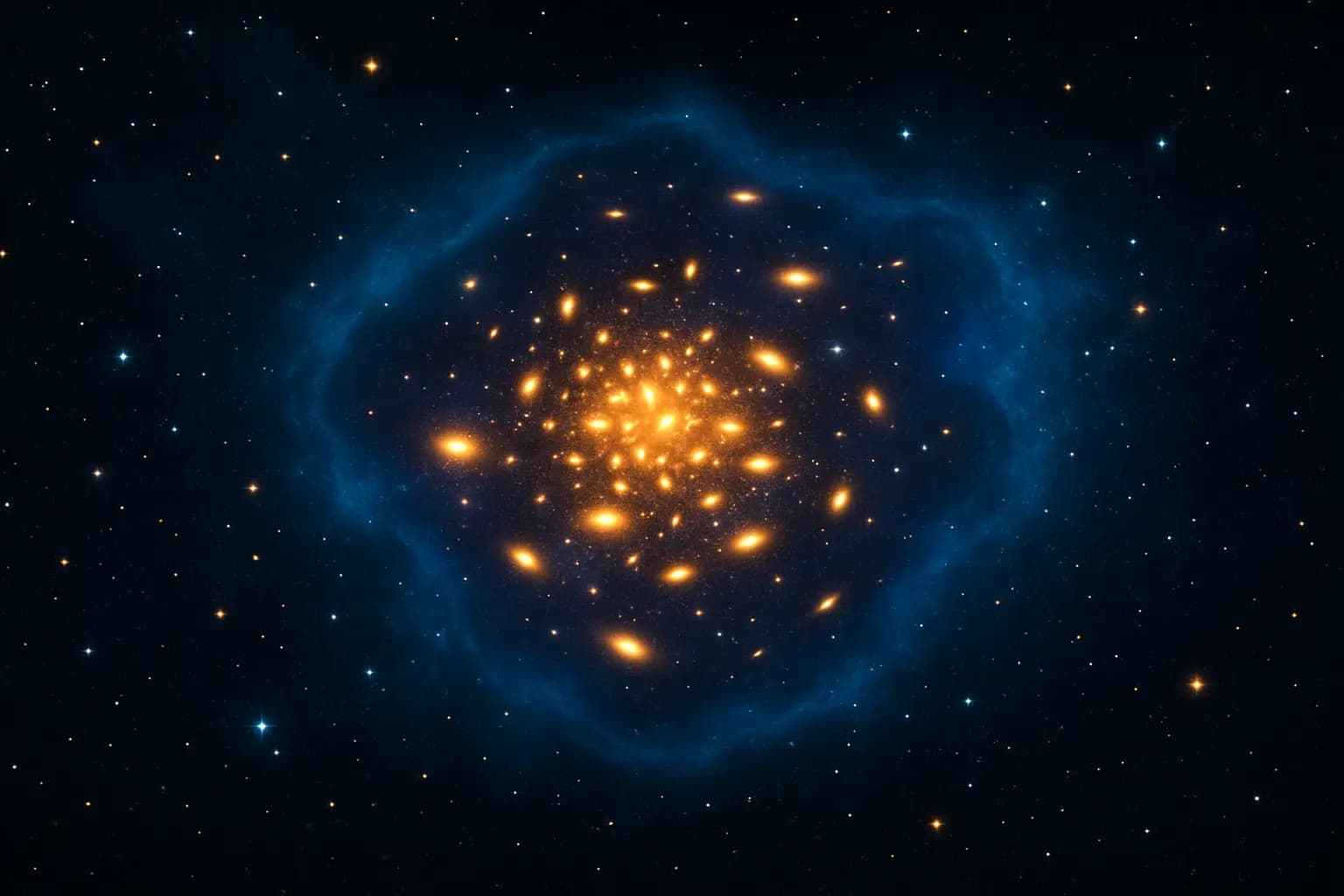
The story of dark matter's discovery is, in its way, a lesson in the power of careful observation over theoretical prejudice. In the 1930s, the Swiss-American astronomer Fritz Zwicky noticed that galaxies within the Coma Cluster were moving far too fast relative to the cluster's visible mass to remain gravitationally bound. Something unseen had to be supplying the additional gravitational glue. Decades later, Vera Rubin and her colleague Kent Ford mapped the rotational velocities of stars in spiral galaxies and found an equally perplexing anomaly: stars at the outer edges of galaxies were orbiting just as quickly as those near the centre, when Newtonian mechanics predicted they should slow dramatically with distance. The only coherent explanation was an invisible halo of matter enveloping each galaxy — matter that does not shine.
We now know, from multiple independent lines of evidence, that dark matter constitutes roughly twenty-seven per cent of the universe's total energy content. The Cosmic Microwave Background — the faint thermal afterglow of the Big Bang — bears subtle imprints whose statistical patterns are consistent only if dark matter participated in the early universe's physics. The large-scale structure of galactic filaments and cosmic voids mirrors, with uncanny precision, the results of simulations that seed the universe with dark matter halos. Even the phenomenon of gravitational lensing — the bending of light from distant objects around massive foreground structures — maps mass distributions that far exceed what luminous matter can account for.