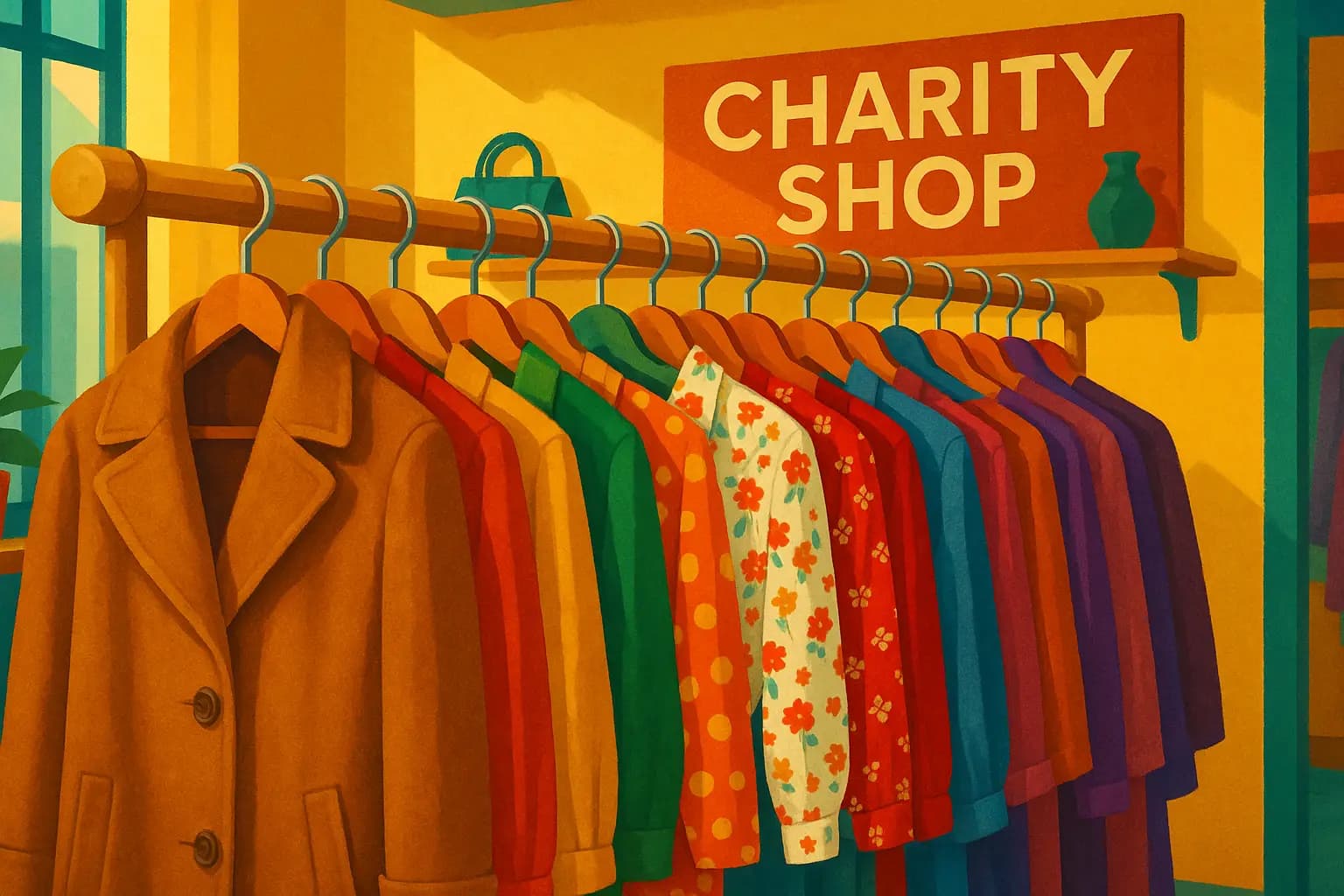
Why Vintage Fashion Refuses to Go Out of Style
Walk into any charity shop on a busy Saturday morning and you will likely find a small crowd of young shoppers flicking through rails of second-hand clothing with focused intensity. Vintage fashion — once the territory of dedicated collectors and theatrical costume designers — has migrated firmly into the mainstream, and it shows no sign of retreating.
The appeal operates on several levels simultaneously. At its most practical, buying second-hand is considerably cheaper than purchasing new garments from high-street retailers, a fact that resonates strongly with younger generations navigating the pressures of rising living costs. Yet economics alone cannot fully account for the phenomenon. There is also a powerful aesthetic argument: older garments were frequently constructed from heavier, more durable fabrics and cut to proportions that many wearers find more flattering than today's fast-fashion silhouettes. A well-preserved wool coat from the 1970s, for instance, will often outlast several cheaper modern equivalents.
Beyond practicality and aesthetics, however, vintage dressing carries a distinct cultural weight. In an era of algorithmic trend cycles — where social media platforms can propel an obscure style from niche to ubiquitous within weeks — wearing vintage offers a form of resistance. The second-hand shopper is, in a sense, opting out of the homogenising forces of mass production, assembling an identity from items that carry their own histories. This individuality is genuinely difficult to replicate. A limited-edition fast-fashion drop, however carefully designed, will still be worn by thousands; a 1960s printed blouse found at a car-boot sale is, for all practical purposes, unique.
The environmental dimension adds further momentum to the trend. The fashion industry is one of the most resource-intensive sectors on the planet, and growing awareness of its carbon footprint has made conscious consumption feel not merely fashionable but morally necessary. Circular fashion — buying, wearing, and reselling rather than discarding — is increasingly positioned not as a compromise but as the sophisticated choice. Vintage, it turns out, may be the most forward-thinking wardrobe decision a person can make.