The Forgotten Library of the Ancient World
Most people, if asked to name the greatest library in history, would instinctively think of Alexandria. The Library of Alexandria, founded in Egypt during the third century BCE, has become a powerful symbol of human intellectual ambition — and of its fragility. Yet the story of ancient libraries is far richer and stranger than this single, famous example suggests.
At its height, the Library of Alexandria is believed to have housed somewhere between 400,000 and 700,000 papyrus scrolls, covering subjects ranging from astronomy and medicine to philosophy and drama. Scholars from across the Mediterranean world gathered there to read, debate, and write. The library was not merely a place of storage; it functioned as a kind of research institute, attracting some of the finest minds of the ancient world, including the mathematician Euclid and the geographer Eratosthenes, who famously calculated the circumference of the Earth with remarkable accuracy.
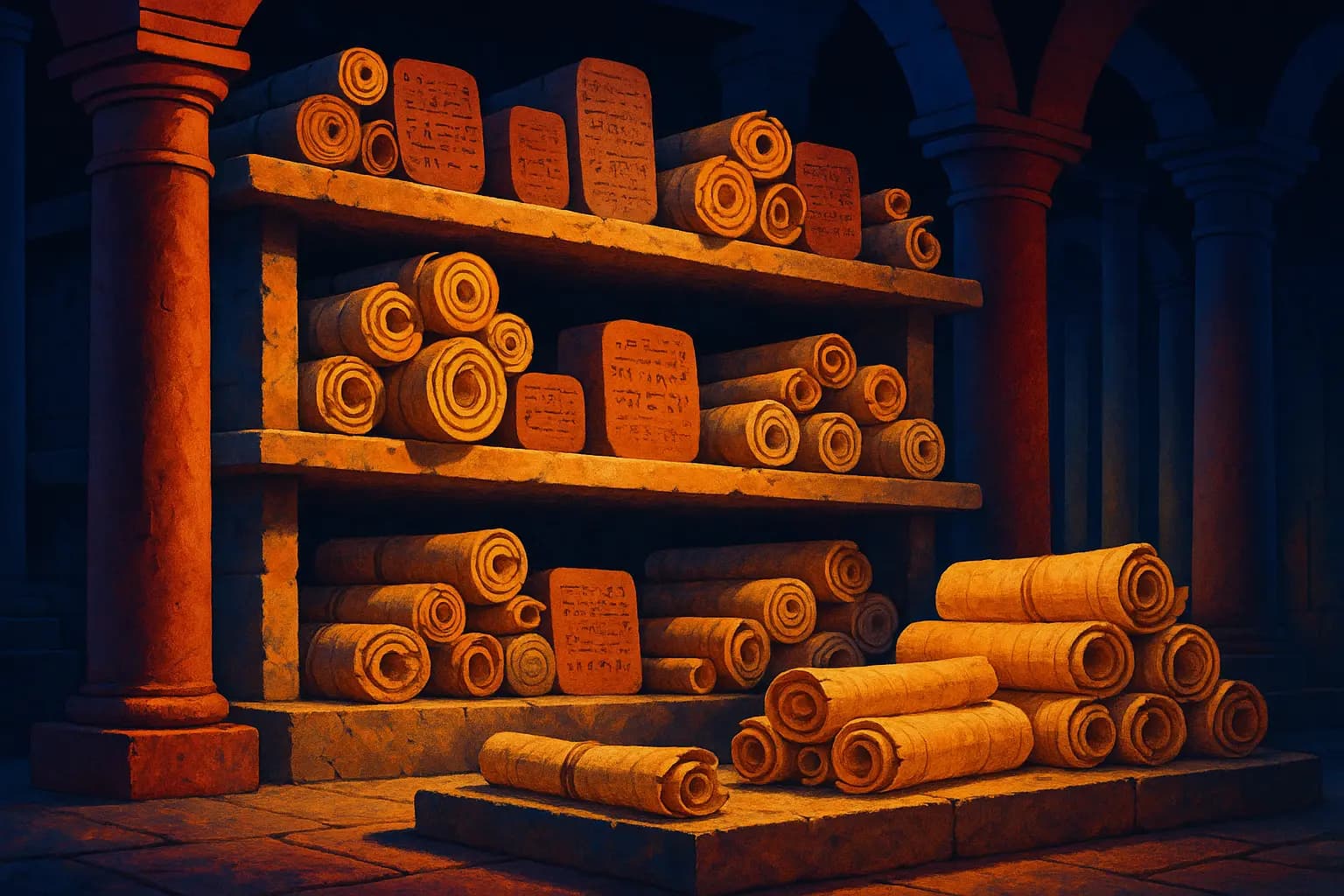
What is less commonly known is that Alexandria was far from unique. The city of Pergamon, in present-day Turkey, built a rival library that allegedly held around 200,000 volumes. According to ancient sources, the rivalry between the two institutions grew so fierce that Egypt banned the export of papyrus to Pergamon — a kind of intellectual trade war — forcing Pergamon's scholars to develop parchment as an alternative writing material. Meanwhile, in Mesopotamia, the Assyrian king Ashurbanipal assembled a vast collection of clay tablets at Nineveh around the seventh century BCE, including early versions of the Epic of Gilgamesh, one of humanity's oldest surviving works of literature.
The fate of these great collections is sobering. Most were destroyed through war, neglect, or simple deterioration over centuries. The gradual decline of Alexandria's library, rather than any single catastrophic fire, is now thought to be the more accurate historical account. What endures, however, is the idea they embodied: that preserving knowledge is itself a civilisation's most urgent task. That conviction, at least, has never been lost.
