The Slow Violence of Soil Degradation
There is something almost wilfully invisible about the crisis unfolding beneath our feet. Soil degradation lacks the dramatic immediacy of a wildfire or a flood; it announces itself in no headline, generates no viral footage. Yet scientists who study land use with any rigour will tell you, without much equivocation, that the accelerating loss of fertile topsoil represents one of the gravest long-term threats to human civilisation — and one of the least discussed.
The figures are sobering in their scale. According to estimates widely cited in environmental literature, roughly a third of the world's arable land has been lost to degradation over the past forty years, eroded by industrial farming practices, deforestation, salinisation, and compaction. Healthy topsoil — the dark, crumbly, biologically rich layer that sustains virtually all terrestrial food production — takes centuries to form naturally, yet can be stripped away in a single season of poor land management. We are, in the bluntest terms, spending a capital that took millennia to accumulate.
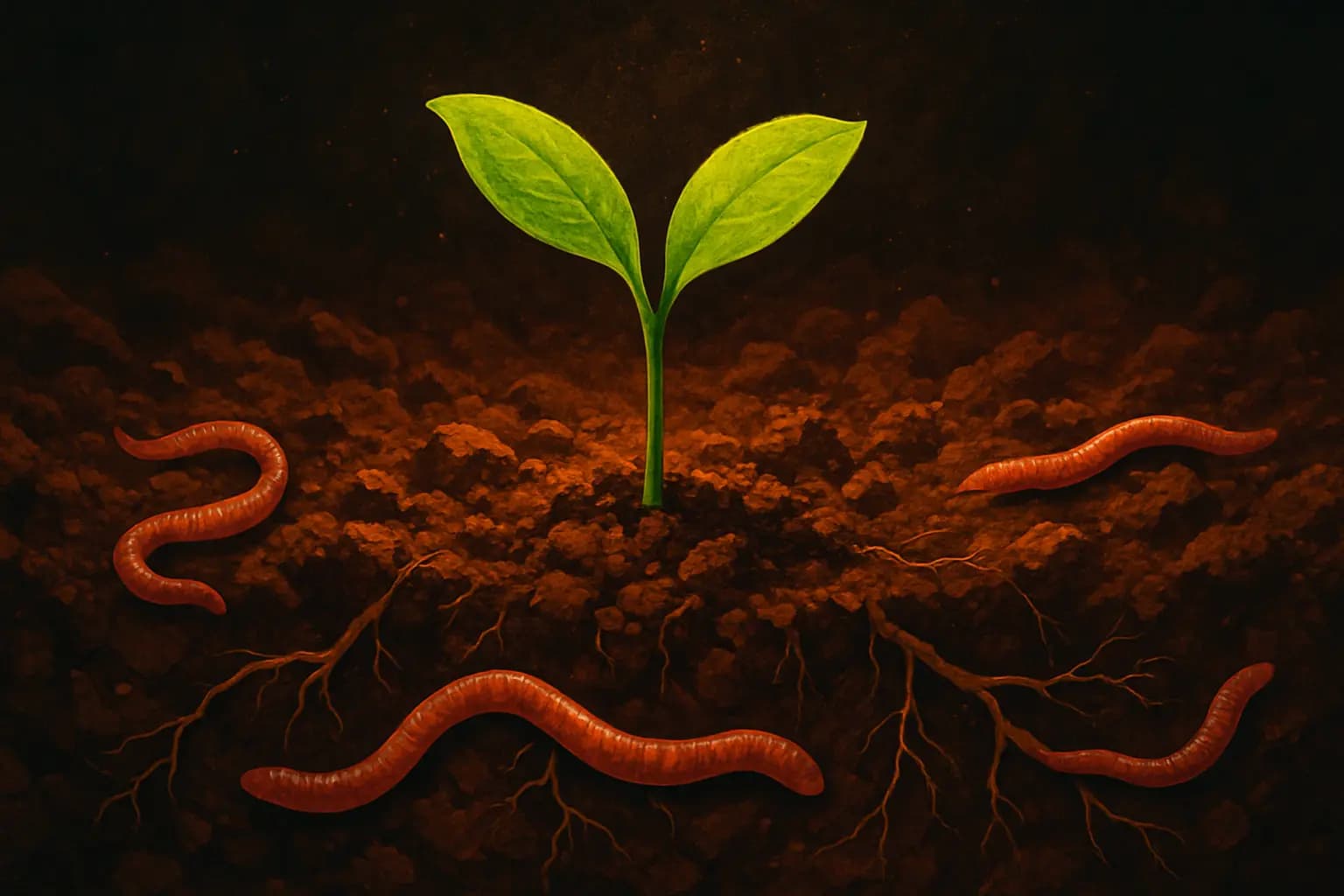
What makes soil so extraordinary, and so underappreciated, is the sheer density of life it contains. A single teaspoon of healthy soil harbours more microorganisms than there are people on Earth — bacteria, fungi, protozoa, nematodes, and a web of other organisms so intricate that science has barely begun to map it. This microbial ecosystem underpins nutrient cycling, water retention, carbon sequestration, and plant immunity. When synthetic fertilisers and pesticides disrupt these communities, yields may hold steady in the short term, but the underlying biological architecture quietly collapses. Farmers are left increasingly dependent on chemical inputs to compensate for what living soil once provided for free.
The carbon dimension of soil health deserves particular attention. Soils collectively store more carbon than the atmosphere and all the world's vegetation combined. When topsoil is disturbed — ploughed, eroded, or left bare — that stored carbon oxidises and enters the atmosphere as carbon dioxide, accelerating the very climate shifts that make sustainable agriculture harder to maintain. Conversely, regenerative practices such as no-till farming, cover cropping, and the reintroduction of diverse plant species can rebuild organic matter, drawing carbon back down in a process that researchers increasingly regard as a meaningful, if partial, lever against climate breakdown.
Politically and culturally, soil sits in an awkward position. It belongs to no single ministry, spans both rural and urban agendas, and resists the kind of telegenic urgency that drives policy action. Campaigners have struggled to kindle public imagination around something that is, by its very nature, underground and slow-moving. The writer Robert Macfarlane has spoken of the need for a new vocabulary of the subterranean — a language that might make the hidden legible and the chronic feel acute. Without such a shift in perception, soil will continue to be treated as an inert substrate rather than a living system of staggering complexity.
There are grounds for cautious optimism. A growing cohort of farmers, ecologists, and policymakers are coalescing around soil health as a cornerstone of both food security and climate strategy. The European Union's Soil Strategy for 2030, the rise of regenerative agriculture movements across North America and Australia, and a quietly expanding body of consumer interest in provenance and sustainability all point in a promising direction. The challenge is one of pace: ecological recovery moves on timescales that sit uneasily with electoral cycles and quarterly profit reports. Persuading institutions to act with genuine urgency on something invisible, slow, and beneath the surface may be the defining test of environmental governance in the decades ahead.