The Loneliness of the Long-Distance Runner Reconsidered
There is a persistent myth in popular culture that endurance running is a solitary, almost monastic pursuit — a communion between one person and the open road, conducted in silence and self-denial. Yet anyone who has stood at the start line of a major marathon, surrounded by tens of thousands of bodies radiating nervous energy, knows that the reality is far more richly social and psychologically layered than this romantic caricature suggests.
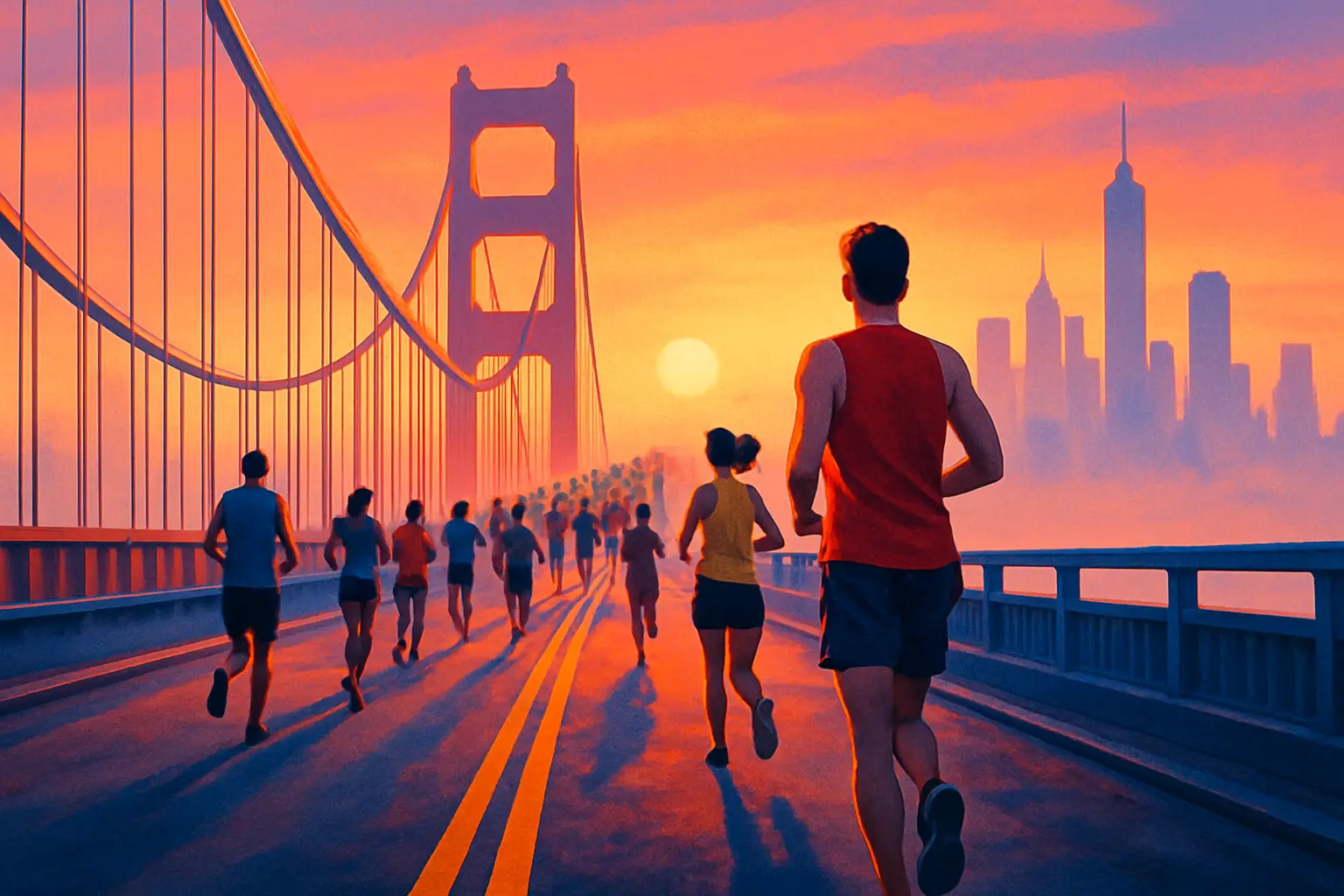
At its core, marathon running is a negotiation between the individual and the collective. Training plans are increasingly designed around group dynamics: running clubs have proliferated in cities worldwide, transforming early-morning streets into moving communities of shared suffering and mutual encouragement. The phenomenon is not merely logistical. Research in sports psychology consistently finds that athletes who train with others push harder, recover faster, and — crucially — sustain the habit over longer periods. The presence of another body alongside you functions as both a mirror and a metronome, calibrating your effort without a word being exchanged.
What makes the marathon particularly compelling as a cultural object, rather than simply an athletic event, is its relationship to failure. Unlike team sports, where individual shortcomings can be absorbed or redistributed, the marathon strips accountability down to its barest form. Every kilometre marker is an honest reckoning. Runners speak of 'hitting the wall' — that notorious physiological and psychological crisis around the 30-kilometre mark where glycogen stores deplete and doubt floods the mind — with a mixture of dread and reverence, as though it were a rite of passage rather than a medical inconvenience. The wall is not simply an obstacle; it is, for many, the point of the entire exercise.
This relationship to voluntary suffering is what puzzles outside observers most. Why pay an entry fee to spend four hours in discomfort? The answer, runners invariably offer, lies somewhere between the neurochemical and the philosophical. The sustained aerobic effort of a long race produces altered states of consciousness that athletes describe variously as euphoric, meditative, or revelatory. More prosaically, completing something genuinely difficult in a world engineered for frictionless ease carries a peculiar and lasting satisfaction — the kind that comfort, by its very nature, cannot provide.
The sport is also quietly reshaping urban identity. City marathons have become powerful soft-power tools: they draw tourism, reframe how residents relate to their own streets, and generate an annual, collective narrative that transcends sporting outcome. A city that hosts a great marathon — Berlin, Boston, Tokyo — acquires a certain civic mythology around it, a story its citizens retell. In this sense, the marathon is less a race than a recurring civic ritual, one that asks its participants, and its spectators, what they are genuinely capable of when comfort is removed from the equation.