The Quiet Revolution of Repair Cafés
Something subtle yet profound has been reshaping the social fabric of towns and cities across Europe, North America, and beyond: the rise of the repair café. These volunteer-run gathering spaces, where people bring broken household items to be fixed alongside skilled neighbours, represent far more than a practical response to a throwaway culture. They embody a quietly radical rethinking of ownership, community, and the relationship between human beings and the objects they depend upon.
The concept originated in Amsterdam in 2009, when activist Martine Postma organised the first event in a local community centre. The idea spread with remarkable speed, and today there are thousands of repair cafés operating across dozens of countries. The format is disarmingly simple: volunteers with expertise in electronics, textiles, woodworking, or metalwork sit alongside members of the public, diagnosing faults and teaching repair techniques rather than merely fixing things on people's behalf. The emphasis on knowledge transfer is deliberate — participants are encouraged to get their hands dirty and understand the mechanics of their own possessions.
The environmental case for repair culture is compelling. In an era defined by planned obsolescence — the deliberate engineering of products to fail or fall out of fashion within a few years — the instinct to discard rather than mend has become deeply ingrained. Consumer electronics alone generate tens of millions of tonnes of waste annually, much of it laced with toxic materials that leach into soil and water. By extending the lifespan of everyday objects, repair cafés chip away at this cycle, demonstrating in practical terms that durability and resourcefulness are viable alternatives to perpetual consumption.
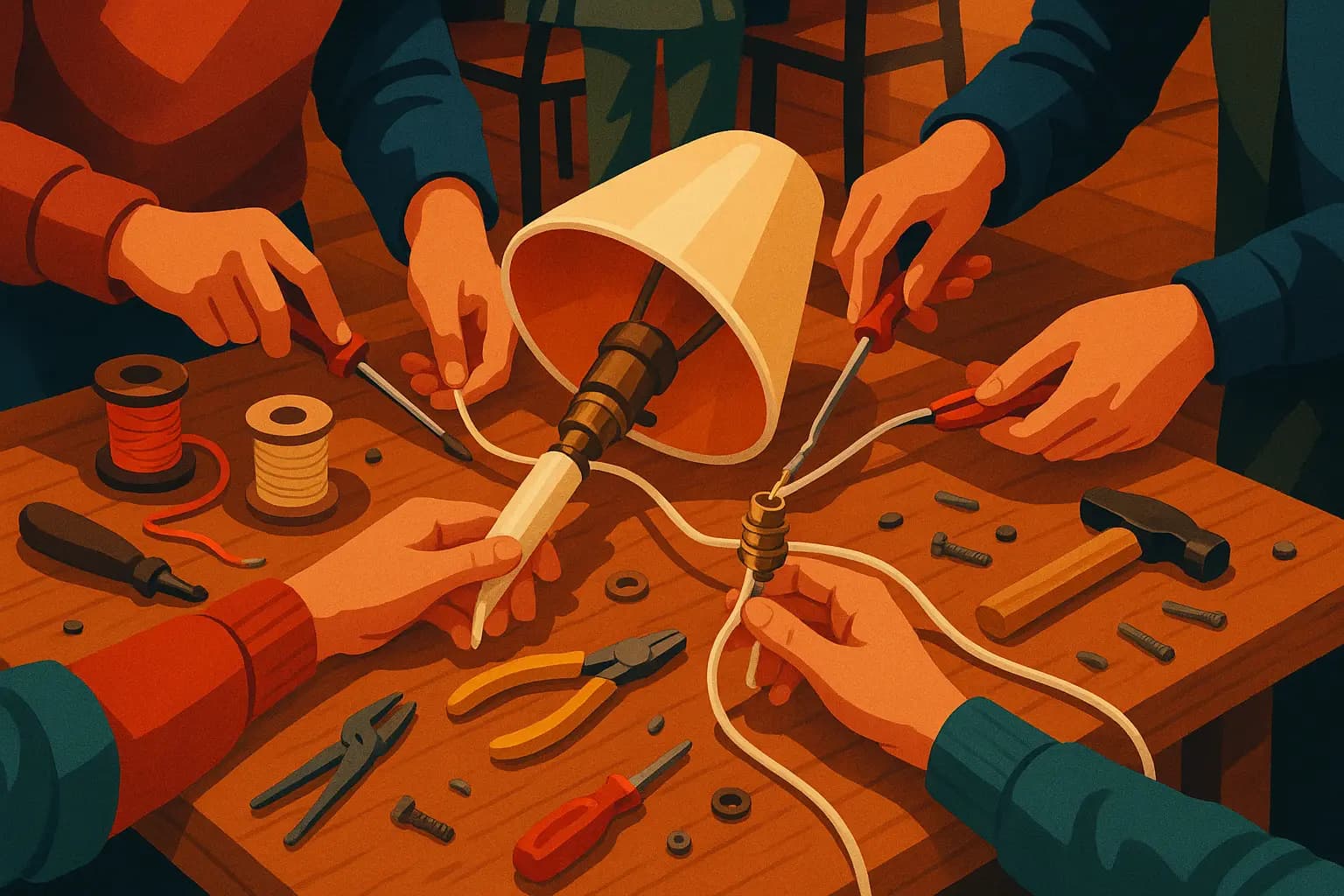
Yet the appeal of these spaces transcends the purely ecological. Regulars describe a particular quality of attention that descends when a small, focused group gathers around a stubborn problem — a seized clock mechanism, a jacket with a shredded lining, a lamp that flickers inexplicably. There is a meditative quality to skilled manual work that stands in sharp contrast to the abstracted, screen-mediated nature of so much contemporary labour. For many participants, the satisfaction of restoring a broken object to usefulness carries an emotional resonance that mere consumption simply cannot replicate.
Perhaps most significantly, repair cafés generate what sociologists call "weak ties" — the low-stakes but meaningful connections between acquaintances that underpin a cohesive community. In an age of atomised living, where neighbours may share a building for years without exchanging more than a nod, these informal workshops create genuine points of contact. A retired electrician and a twenty-something graphic designer, united by a malfunctioning turntable, may find themselves in a conversation neither anticipated. It is this human surplus — unplanned, unhurried, and quietly nourishing — that no app or online marketplace has yet managed to replicate, and that may ultimately prove to be the repair café's most enduring contribution.
