The Surprising Intelligence of Octopuses
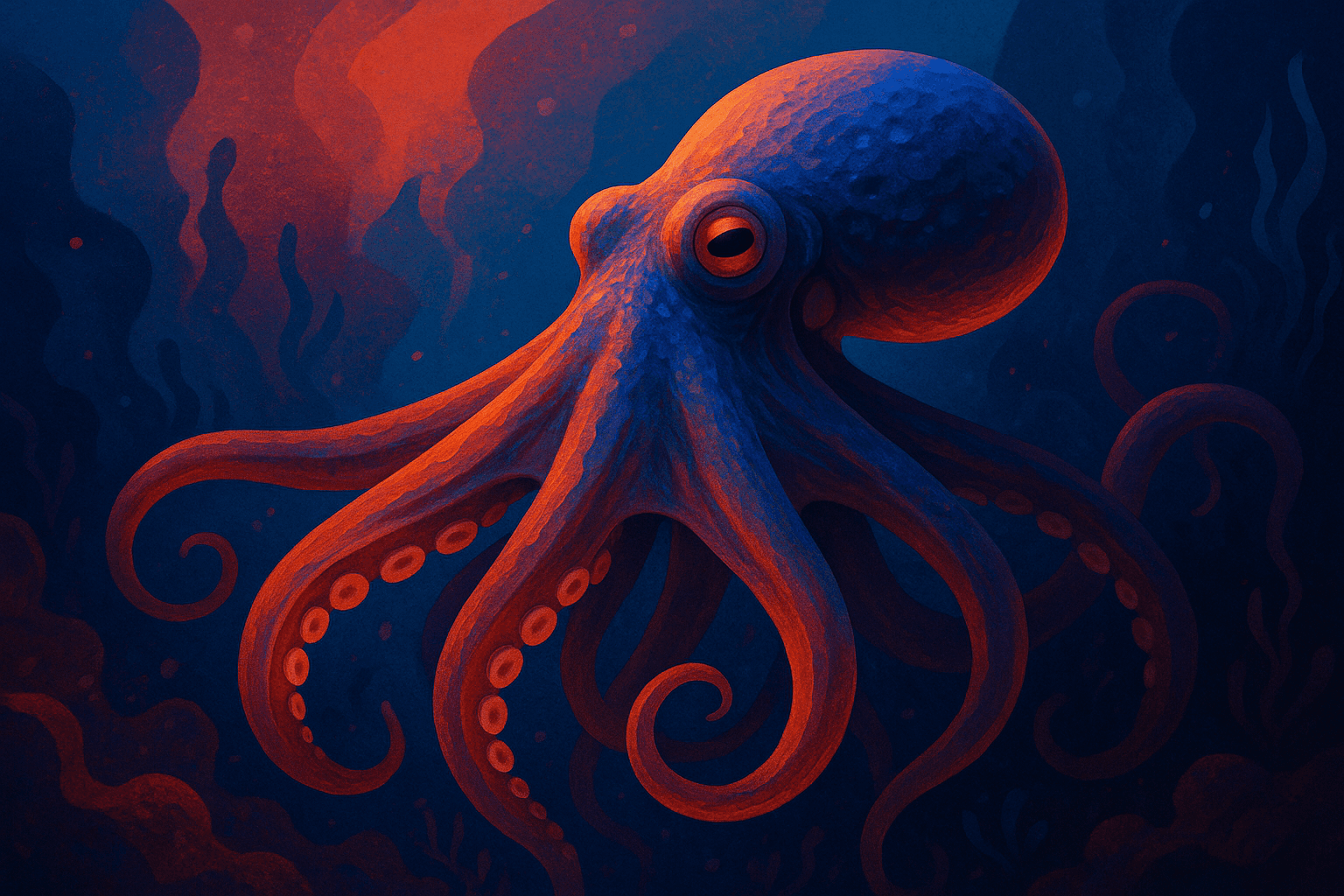
Few creatures challenge our assumptions about intelligence as much as the octopus. With three hearts, blue copper-based blood, and a nervous system unlike anything found in vertebrates, this soft-bodied mollusc seems almost designed to puzzle scientists. Roughly two-thirds of its neurons are not located in its central brain but distributed throughout its eight arms, meaning each limb can taste, touch, and even make decisions with a remarkable degree of independence.
Researchers studying octopuses in laboratories have observed behaviour that hints at genuine cognition. They solve puzzles, open screw-top jars, navigate mazes, and recognise individual human faces, sometimes squirting jets of water at keepers they appear to dislike. Some species even use coconut shells or stones as portable shelters, a rare example of tool use among invertebrates.
What makes their intelligence particularly intriguing is its evolutionary origin. The last common ancestor we share with octopuses lived more than 500 million years ago and was little more than a flattened worm. Complex problem-solving therefore evolved entirely separately in their lineage, offering a fascinating glimpse of how intelligence might emerge under radically different biological conditions.
Studying these enigmatic animals not only deepens our understanding of the ocean but also broadens our definition of what a thinking mind can look like — perhaps the closest thing on Earth to encountering an alien.
