The Quiet Renaissance of Handwritten Letters
There is something quietly subversive about sitting down to write a letter by hand in an age that has engineered friction out of almost every act of communication. No autocorrect smooths your syntax, no algorithm suggests your next word, and no notification interrupts the particular stillness that descends when pen meets paper. Yet across various corners of the world, a modest but unmistakable revival of epistolary culture is underway — and the reasons behind it reveal something rather telling about what we have inadvertently surrendered in the rush toward digital convenience.
For most of human history, the letter was the primary instrument through which intimate thought travelled across distance. Its conventions — the salutation, the deliberate unfolding of news, the closing flourish — imposed a kind of architecture on feeling, compelling writers to organise their thoughts with a care that real-time messaging simply does not demand. When you could not delete or unsend, you chose your words with far greater precision. The historian Robert Darnton once observed that letters were not merely records of thought but engines of it: the act of composition shaped what the writer actually came to believe.
What distinguishes today's revivalists from nostalgic hobbyists is the conscious intentionality they bring to the practice. Pen-pal networks connecting strangers across continents have proliferated quietly online, with some communities boasting tens of thousands of active correspondents. Specialist stationery shops in cities from Tokyo to Amsterdam report surging interest among people in their twenties and thirties — a demographic that grew up entirely within the digital ecosystem and is therefore approaching handwriting not as a regression but as a deliberate act of resistance. For them, the slowness is not a bug; it is the entire point.
The psychological case for letter-writing is, it turns out, surprisingly robust. Research into expressive writing suggests that composing extended, reflective prose about one's experiences and feelings has measurable benefits for emotional regulation and even immune function — findings associated most famously with the psychologist James Pennebaker. A handwritten letter, especially one addressed to another person, adds the further dimension of social connection to this already potent process. The knowledge that a specific human being will hold the physical object you have laboured over introduces a register of vulnerability and care that a text message, however heartfelt, rarely achieves.
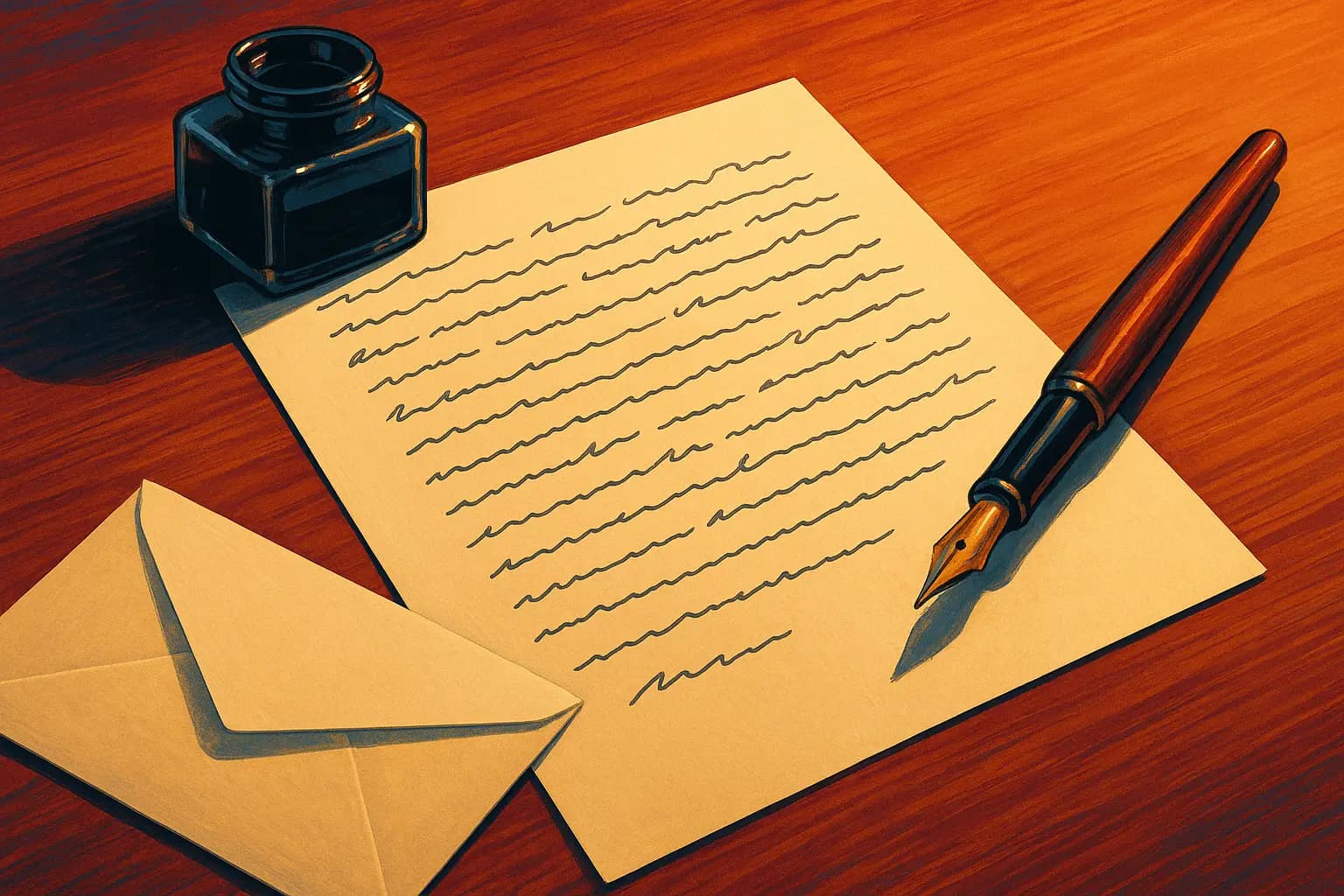
There are also subtler, more aesthetic pleasures at stake. A letter retains the idiosyncrasies of a hand — the slight leftward lean under tiredness, the ink blot that marks a moment of hesitation, the way the pressure lightens toward the end of a long paragraph. These are the textures of a living presence that no font can replicate, and recipients often describe the experience of receiving a handwritten letter as strikingly physical: the weight of the envelope, the particular scent of the paper, the theatrical pleasure of unfolding a page written specifically for them. Such sensory richness is not incidental; it is precisely what grants the medium its emotional authority.
None of this is to mount a sentimental argument against digital communication, which has its own genuine and irreplaceable virtues. But the letter revival does invite us to ask a sharper question about what efficiency, in stripping away the friction that once attended communication, has also stripped away. Speed and ease are not invariably the same thing as connection. Sometimes the labour is the message — and there is a growing cohort of people who have quietly decided that certain things worth saying are also worth taking the time, and the ink, to say properly.
